Top 10 Medical Precision Machining Companies Worldwide
Medical Precision Machining sits where advanced manufacturing meets patient safety. A tiny burr, a rough surface, or a dimensional shift can affect an implant’s performance. This makes supplier selection more demanding than ordinary component sourcing.
This guide examines the Top 10 Medical Precision Machining Companies Worldwide. It considers machining capability, material experience, inspection systems, certifications, and documented medical-device projects. Titanium, stainless steel, cobalt-chrome, and PEEK require different cutting strategies. Each material can expose weaknesses in tooling, fixturing, or process control. Reliable companies also use coordinate measuring machines, optical inspection, traceability systems, and controlled documentation. ISO 13485 certification matters, but it should not be treated as the entire story.
Manufacturing quality expert W. Edwards Deming stated, “Quality comes not from inspection, but from the improvement of the production process.” That principle remains highly relevant to medical machining. Inspection catches problems. Strong processes prevent them.
The selected companies may support prototypes, surgical instruments, orthopedic parts, or complex implant components. Their strengths are not identical. Some excel at five-axis machining, while others offer stronger validation support or larger production capacity. No worldwide list can capture every regional advantage. Rankings can also change as technologies, audits, and customer requirements develop. That limitation deserves attention.
Readers should verify current certifications, tolerances, lead times, and regulatory capabilities directly with each supplier. A polished website is not proof of consistent production. Shop-floor evidence matters more. This overview aims to provide a practical, balanced starting point for engineers, medical-device developers, and procurement teams evaluating global manufacturing partners.
Medical Precision Machining: Definition, Scope, and ISO 13485:2016 Standards
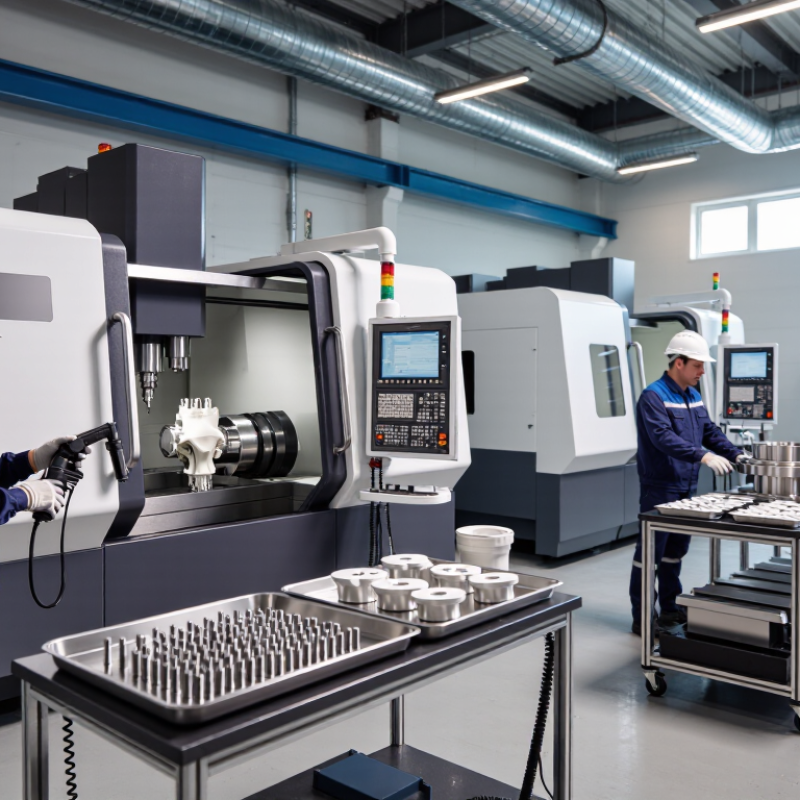
Medical precision machining produces small, highly controlled components for surgical instruments, implants, diagnostic equipment, and fluid-handling systems. The work may involve titanium, stainless steel, cobalt-chrome, or medical-grade polymers. Tight tolerances matter, but dimensional accuracy is only one part of performance. A reliable supplier also controls contamination, surface finish, burrs, tool wear, and material traceability.
ISO 13485:2016 provides a quality management framework for organizations serving the medical device sector. It emphasizes documented processes, risk-based thinking, supplier evaluation, complaint handling, and corrective action. Machining companies should connect drawings, inspection reports, material certificates, and batch records throughout production. Process validation becomes important when results cannot be fully verified by final inspection. For example, cleaning and passivation may require controlled parameters and repeatable evidence.
A polished component can still fail its intended use. That uncomfortable fact deserves attention.
Tips: Check how a supplier manages revisions, nonconforming parts, calibration, and traceability. Ask for relevant audit evidence, not only a certificate image. Review measurement methods for difficult features, such as deep bores or thin walls. Confirm whether production samples reflect real equipment and operators. ISO 13485:2016 certification supports confidence, but it does not replace technical judgment. Even strong systems can contain gaps, especially when documentation becomes routine and people stop questioning it.
Global Market Context: Medical Devices Represent a US$500B+ Industry
The medical device industry represents a global market valued above US$500 billion, depending on the products and regions included.
It covers implants, surgical instruments, diagnostic equipment, monitoring systems, and disposable components. This enormous market creates steady demand for precision machining companies worldwide. A tiny dimensional error can affect assembly, sterilization, or patient safety. The commercial stakes are high.
Medical machining often involves titanium, stainless steel, cobalt alloys, and engineering plastics. These materials require controlled cutting speeds, reliable tooling, and careful heat management.
Experienced manufacturers document machine settings, inspection results, and material certificates throughout production. Coordinate measuring machines can verify holes, threads, radii, and complex surfaces within tight tolerances. Clean handling also matters, especially when parts move toward sterile environments.
However, precision does not mean perfection. Tool wear can develop before operators notice it. A polished inspection report may still hide weak process control. This is where supplier evaluation becomes practical, not decorative. Buyers should examine traceability, validation records, operator training, capacity, and corrective-action history. Certifications support confidence, but they do not replace production evidence. Site audits, sample inspections, and clear communication reveal more than a sales presentation. Reliability is built repeatedly, across ordinary batches, under real delivery pressure.
Evaluation Criteria: ±0.01 mm Tolerances, Materials, Certifications, and Capacity
Top 10 Medical Precision Machining Companies Worldwide
Selecting a medical machining partner requires more than comparing advertised tolerances. A ±0.01 mm specification should be supported by inspection records, calibrated equipment, and controlled processes. Ask whether the tolerance applies to every feature or only selected dimensions. That detail matters.
Materials must match the device’s clinical purpose and manufacturing method. Common choices include titanium, stainless steel, cobalt-chromium alloys, PEEK, and medical-grade aluminum.
Experienced suppliers should explain cutting behavior, surface finish, heat generation, and material traceability. A certificate alone is not enough. Review lot information and verify that incoming material checks are documented.
Certifications and Process Discipline
Certifications provide useful evidence, but they do not replace technical judgment. ISO 13485 supports a medical-device quality system, while ISO 9001 can indicate broader process discipline. Evaluate calibration schedules, nonconformance handling, inspection methods, and documented corrective actions.
Capacity also deserves careful testing. A supplier may produce excellent prototypes yet struggle with repeatability at ten thousand parts. Examine multi-axis equipment, secondary operations, inspection capacity, lead times, and contingency planning. Production numbers can sound impressive.
Real audits often reveal small gaps.
A polished website cannot prove stable capability. Ask for sample inspection reports, process capability data, and clear answers about difficult features. Some suppliers may not disclose everything, but hesitation should invite deeper review. The strongest candidates combine measurable precision, suitable materials, accountable certification practices, and capacity that remains reliable under pressure.
Top 10 Medical Precision Machining Companies Worldwide: Profiles and Capabilities
Top 10 Medical Precision Machining Companies Worldwide: Profiles and Capabilities
The global medical machining field includes ten distinct supplier profiles. Profile one specializes in titanium bone screws. Profile two produces cobalt-chrome joint components. Profile three focuses on stainless-steel surgical tools. Profile four supports miniature implants and micro-machined parts. Profile five handles complex five-axis orthopedic components. Profile six provides rapid prototypes for medical device teams. Profile seven offers high-volume CNC production with automated inspection. Profile eight develops custom tooling and fixtures. Profile nine focuses on surface finishing, deburring, and passivation. Profile ten delivers integrated machining, cleaning, packaging, and documentation. Each profile serves a different production pressure. Tight tolerances alone do not prove medical readiness.
Reliable suppliers usually demonstrate documented process controls, material traceability, equipment calibration, and controlled inspection records. ISO 13485-based quality systems can support consistent medical manufacturing, but certificates should not replace practical audits. Ask about gauge resolution, first-article inspection, lot control, and nonconformance handling. Examine sample drawings, process plans, and realistic lead times. A polished presentation can hide weak production discipline. No supplier is perfect. Even experienced teams may underestimate finishing time or inspection delays. That weakness deserves honest discussion.
Tips: Compare capabilities against your actual material, tolerance, volume, and regulatory needs. Request a sample quality report before placing a large order. Check how operators protect small parts from scratches and contamination. Visit the facility when possible. Observe cleanliness, measurement practices, and employee training. Traceability matters. Fit beats fame.
Top 10 Medical Precision Machining Companies Worldwide — Profiles and Capabilities
This neutral reference chart compares the nominal densities of ten materials commonly used in medical precision machining and device manufacturing. It contains no company or brand-specific data.
Material selection affects machining strategy, tool wear, dimensional stability, sterilization compatibility, and the final weight of medical components.
Compliance Comparison: FDA 21 CFR Part 820, Traceability, and Global Reach
When comparing the top 10 medical precision machining companies worldwide, compliance evidence matters more than polished claims. FDA 21 CFR Part 820 alignment should be checked through controlled procedures, inspection records, nonconformance reports, and corrective action histories. A certificate alone proves very little. It can be outdated.
The strongest suppliers connect machining data to each finished component. Traceability should cover raw material heat numbers, operator identity, machine settings, inspection equipment, and final release approval. Digital records can reduce transcription errors, but they still require access controls and periodic review. During an audit, a supplier should retrieve one component’s history quickly. Minutes matter.
Global reach also needs careful examination. A company may operate across several regions, yet local production sites can follow different procedures. Ask whether quality standards, calibration methods, and change controls remain consistent across facilities. FDA 21 CFR Part 820 requirements should be compared with ISO 13485 practices, especially for risk management, supplier control, and process validation. The comparison is not always clean. Regulatory expectations evolve, and interpretation can differ between auditors. Experienced buyers should examine recent audit findings, employee training records, and documented responses to production problems. A flawless history may sound attractive, but realistic evidence of learning is often more credible.