How to Find a Reliable CNC Machining Parts Supplier
Finding a reliable Cnc Machining Parts supplier is not simply a price comparison. It is a risk-control decision involving tolerances, materials, capacity, documentation, and delivery discipline. A supplier may send a perfect first sample, then miss weekly tolerances when order volumes increase. That gap matters.
Industry data supports a careful approach. Fortune Business Insights valued the global CNC machine market at approximately USD 83.99 billion in 2023, reflecting strong demand for precise, automated production. Deloitte’s 2024 Global Manufacturing Industry Outlook also identifies supply-chain resilience, digital manufacturing, and operational visibility as major priorities for manufacturers. These trends affect supplier evaluation directly. A capable partner should provide traceable inspection records, stable process control, and realistic production schedules, not attractive claims alone.
Look closely at the details. Ask for material certificates, calibration records, first-article inspection reports, and examples of comparable parts. Review how the supplier handles a 0.02 mm tolerance, a scratched anodized surface, or a late design revision. ISO 9001 certification can demonstrate a documented quality system, but certification alone does not guarantee excellent parts. That is an uncomfortable truth.
Site audits, video inspections, and small pilot orders can reveal practical weaknesses before full production begins. Check whether engineers respond with clear questions about datum structures, surface finish, and inspection methods. Reliable suppliers usually discuss manufacturability before quoting. However, even experienced buyers can overvalue certificates and overlook communication speed. The strongest decision combines documented evidence, technical dialogue, sample verification, and measured delivery performance. This approach reduces avoidable rework and builds a supplier relationship based on evidence rather than optimism.
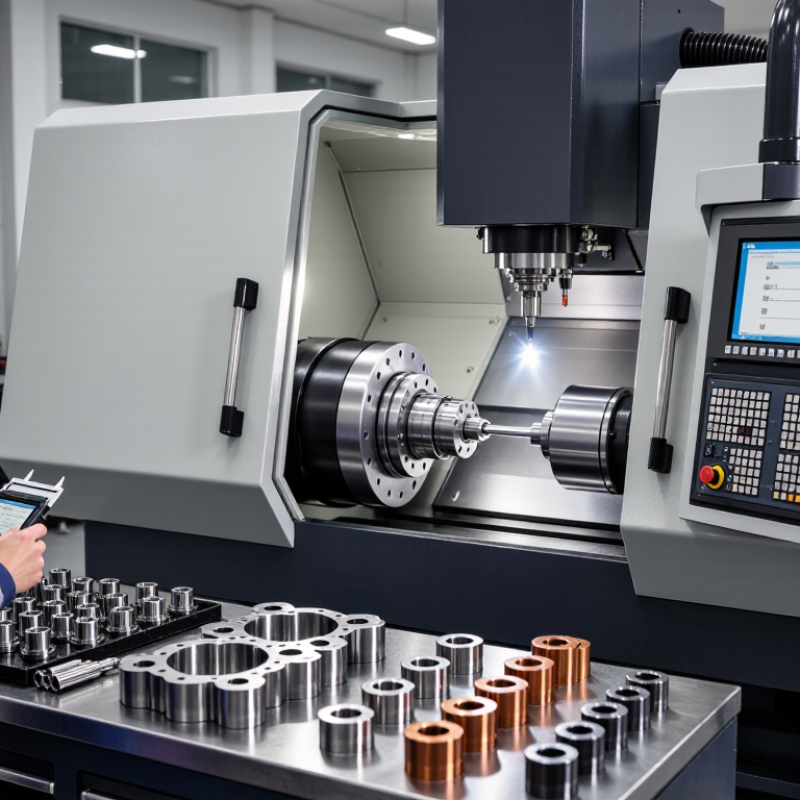
Define Your CNC Machining Requirements and Quality Standards
Finding a reliable CNC machining parts supplier starts with a precise definition of your requirements. Share current drawings with revision numbers, material grades, dimensions, tolerances, surface finishes, and expected annual volume. Avoid phrases like “standard quality.” They invite different interpretations.
Small details matter.
For critical holes, state the diameter tolerance and inspection method. If a shaft must fit a bearing, provide the mating part or functional clearance. Specify edge breaks, thread standards, heat treatment, and acceptable cosmetic marks. Ask for material certificates, dimensional inspection reports, and part traceability. A dependable supplier should explain its measuring equipment and calibration process. It should also identify which features require in-process checks.
My early purchasing checklist was incomplete. I focused on unit price and delivery, but ignored datum selection and burr control. That caused assembly delays. Now, I request a first-article sample and compare it against the approved drawing before releasing larger production. I also ask how nonconforming parts are separated and corrected. This reveals more than a polished quotation.
Quality standards should be measurable. Define sampling levels, critical dimensions, reporting formats, and approval responsibilities. Include packaging requirements, especially for polished or corrosion-sensitive parts. A supplier may accept every requirement, yet misunderstand one tolerance. Review technical questions with an experienced engineer before production begins. Even a perfect drawing can leave room for interpretation. That uncomfortable gap deserves attention.
Assess a Supplier’s Equipment, Materials, and Production Capabilities
A reliable CNC machining supplier should prove capability on the shop floor, not only through a polished website. Ask for the machine list, including three-axis, five-axis, turning, and mill-turn equipment. Confirm each machine’s working envelope, positioning accuracy, spindle range, and maximum part size. A 2024 market report from Grand View Research forecasts roughly 10% annual growth for CNC machining equipment through 2030. That growth makes capacity claims harder to evaluate, especially when suppliers outsource overflow work.
Material control deserves equal attention. Request certificates showing alloy grade, heat number, chemical composition, and mechanical properties. For aluminum, steel, or engineering plastics, the material must match the drawing and purchase order. Check whether the supplier records storage conditions and prevents mixed batches. The 2023 ISO Survey reported more than 1.2 million ISO 9001 certificates worldwide. Certification helps, but it does not prove every process is stable.
Inspection evidence is more useful than promises. Review calibration records for CMMs, height gauges, micrometers, and optical systems. Ask for a sample inspection report with actual measurements, tolerances, and gauge identification. I have seen capability sheets that looked excellent but lacked repeatability data. That remains a warning. Request first-article results, process capability studies, and corrective-action records when dimensions drift. A supplier should explain its response to a failed batch clearly. If the explanation sounds vague, pause before approving production.
Compare Pricing, Lead Times, Communication, and Engineering Support
A reliable CNC machining supplier should be compared beyond the unit price. The 2023 Global Chief Procurement Officer Survey identified cost control as a leading purchasing priority. Still, the cheapest quote may exclude tooling, surface treatment, inspection, or shipping. Request an itemized offer for the same material, quantity, tolerance, and finish. For example, compare 100 aluminum parts, a 0.02 mm tolerance, and a specified inspection report.
Lead time should be divided into engineering review, programming, machining, quality inspection, and dispatch. A supplier promising five days may only mean cutting time. Ask for milestone dates and a recovery plan. Communication matters during this process. In my experience, a clear reply with a marked-up drawing is more valuable than a quick “yes.” The 2024 MHI Annual Industry Report reported that 83% of supply-chain professionals considered innovation important or very important. That supports choosing suppliers with practical engineering input, not just machines. I still make mistakes when judging support too quickly.
Tips: Send the same RFQ package to every supplier. Ask for DFM comments, tolerance-risk notes, and sample inspection data. Test response quality before placing a large order. Check whether the engineer explains a problem in plain language. A vague answer today can become a costly delay later.
How to Find a Reliable CNC Machining Parts Supplier - Compare Pricing, Lead Times, Communication, and Engineering Support
| Supplier Profile |
Typical Prototype Price
for 10 Aluminum Parts |
Prototype Lead Time |
Production Lead Time
for 500 Parts |
Communication Response |
Engineering Support |
Quality Documentation |
Reliability Score |
Profile A
Local job shop |
US$420–580 |
5–8 business days |
4–6 weeks |
Same business day
Phone and email |
Strong DFM review, material recommendations, and tolerance consultation |
Inspection report and material certificate available |
4.6/5 |
Profile B
Contract manufacturer |
US$290–410 |
7–12 business days |
3–5 weeks |
Within 1 business day
Email and project portal |
Dedicated application engineer and formal manufacturability feedback |
FAI, dimensional report, and traceability package available |
4.4/5 |
Profile C
Online machining network |
US$180–360 |
8–15 business days |
4–7 weeks |
1–2 business days
Platform messaging |
Automated DFM alerts; advanced engineering review may cost extra |
Standard inspection report; additional reports usually charged separately |
3.9/5 |
Profile D
High-volume factory |
US$240–390 |
10–18 business days |
2–4 weeks |
Within 1 business day
Account manager and email |
Strong process engineering, fixture design, and production optimization |
PPAP-style documentation and lot traceability available |
4.3/5 |
Profile E
Small specialist shop |
US$350–520 |
6–10 business days |
5–8 weeks |
Within 1–2 business days
Email preferred |
Excellent support for complex geometries, tight tolerances, and difficult materials |
Basic inspection report; advanced documentation by quotation |
4.1/5 |
Evaluation guidance: Compare the complete quotation rather than unit price alone. Confirm material grade, surface finish, tolerance requirements, inspection scope, packaging, shipping terms, revision control, and corrective-action procedures before placing an order.
Review Samples, References, and Long-Term Supplier Reliability
Finding a reliable CNC machining parts supplier requires more than checking a website. In my experience, samples reveal how carefully a supplier works. Request several parts made from similar materials and tolerances. Inspect threads, corners, surface marks, and edge finishing. Measure critical dimensions with calibrated tools. Ask for material certificates and inspection reports. A supplier should explain its process clearly. Do not guess. One attractive sample cannot prove consistent production quality.
References offer evidence from actual working relationships. Contact customers with similar part requirements, if possible. Ask whether deliveries arrived on schedule and matched approved drawings. Learn about response times when problems occurred. Ask how the supplier handled rejected parts or design changes. “Would you order again?” is a useful question. That answer often reveals hesitation. Still, references can be selective, so request more than one contact.
Long-term reliability depends on systems, not friendly promises. Review inspection records, production capacity, and communication procedures. Ask whether the same quality checks continue after the trial order. Confirm how revisions, packaging, and replacement parts are managed. A written corrective-action process matters. A small trial order can expose weaknesses before full production begins. I once accepted a low quotation without checking measurement records. The first batch required costly rework. That mistake was expensive. Now I compare samples, references, and documented processes together. I also record every deviation, even minor ones, because small surprises rarely remain small.