Finding reliable Semiconductor Cnc Machining suppliers in 2026 requires more than comparing hourly rates. Semiconductor components demand clean production, stable tolerances, traceable materials, and careful handling. A supplier may advertise five-axis capability, yet lack experience with quartz, aluminum, stainless steel, ceramics, or sensitive equipment parts. That gap can become expensive.
Gordon Moore, the semiconductor industry pioneer, famously observed, “The number of transistors on an integrated circuit doubles about every two years.” His statement highlights a continuing pressure: suppliers must support faster development without weakening process control. For buyers, this means examining machine accuracy, inspection equipment, operator training, and documented quality systems. Ask for sample inspection reports. Review surface-finish measurements. Check how the factory controls chips, dust, coolant, and cross-contamination.
The best supplier is not always the largest one. Sometimes, a smaller workshop provides clearer communication and stronger engineering attention. That can matter when a drawing changes overnight. Still, personal impressions are not enough. Request material certificates, first-article inspection records, tolerance data, and realistic production schedules. Confirm whether the supplier can protect confidential designs and maintain consistent results across repeated batches.
Some evaluations will remain uncertain. That is normal. A polished website proves little. A factory visit may also show only one clean production day. Effective sourcing combines evidence, technical questions, and cautious trial orders. This guide explains how to compare Semiconductor Cnc Machining suppliers, identify hidden risks, and build a more dependable sourcing decision for 2026.
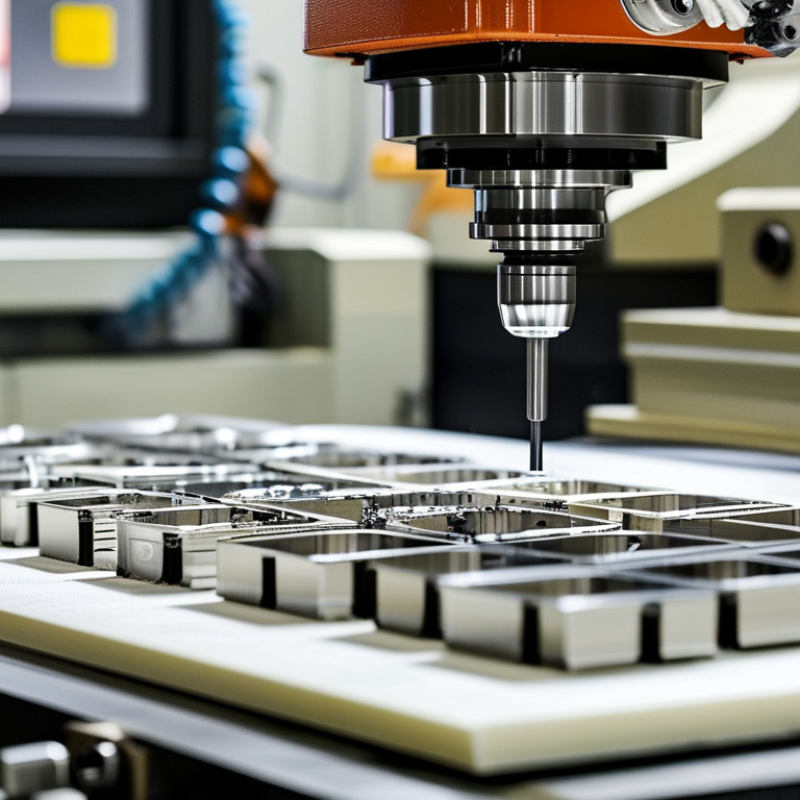
Semiconductor CNC machining suppliers produce the metal and polymer parts used around wafers, chambers, vacuum systems, and inspection tools. Their work demands more than cutting aluminum to a drawing. They interpret tight tolerances, surface-finish limits, cleanliness rules, and material compatibility. A capable supplier also reviews manufacturability before production begins. That review can prevent a thin wall from vibrating during milling.
Industry demand makes this role increasingly important. SEMI’s World Fab Forecast projected global semiconductor manufacturing equipment spending at about $107 billion in 2025. More fabrication capacity means more equipment components, replacement parts, and qualification work. Suppliers typically create process plans, select certified materials, control coolant contamination, and document every inspection result. They may use coordinate-measuring machines, optical inspection, and controlled cleaning areas. Traceability matters. A missing heat-treatment record can delay customer approval.
Suppliers also support prototypes and low-volume production. They adjust tool paths, manage burrs, protect sealing surfaces, and package parts for clean handling. The 2024 Semiconductor Industry Association factbook reported global semiconductor sales reached approximately $627.6 billion in 2024. That scale increases pressure for repeatable component quality. Still, a polished website proves little. I would examine sample inspection reports, equipment capability, revision control, and response times. Some suppliers claim semiconductor experience without explaining contamination controls. That gap deserves questioning. Even excellent machining plans may need revision after the first functional test.

To find reliable semiconductor CNC machining suppliers in 2026, define the machining requirement before requesting quotations. Semiconductor parts often include chamber components, fixtures, gas-line blocks, and vacuum hardware. Specify the material grade, stock condition, part dimensions, critical tolerances, flatness, concentricity, and surface roughness. For example, a ±0.01 mm tolerance can be insufficient if sealing surfaces require tighter control. State the cleaning method, allowable residues, packaging class, and inspection documents. These details prevent suppliers from guessing.
SEMI’s 2024 World Fab Forecast projected global semiconductor manufacturing capacity growth of about 6% in 2024 and 7% in 2025. That expansion increases pressure on machining capacity, inspection speed, and supply consistency. Your RFQ should therefore include annual volume, pilot quantity, delivery frequency, and acceptable process variation. Request a capability study, coordinate-measuring-machine results, material certificates, and lot traceability. ISO 14644 cleanliness classifications can help define controlled environments, but they do not replace a part-specific cleanliness specification. This is where many projects become unclear.
Tips: Ask for sample inspection reports, not only certificates. Define whether burrs, tool marks, and discoloration are acceptable. Include a drawing revision and approval process. A polished drawing is not enough. I sometimes see engineers specify micron-level accuracy without identifying the measurement method. That requirement needs reconsideration. Also confirm whether final cleaning occurs before or after inspection, because handling can reintroduce particles. Thresholds should be practical, measurable, and linked to wafer-process risk.
How to Find Semiconductor CNC Machining Suppliers 2026?
Supplier expertise should be visible in daily work, not only in a polished presentation. Ask how the team machines aluminum, stainless steel, ceramics, or engineering plastics used near sensitive equipment. Experienced suppliers can explain tool selection, burr control, thermal distortion, and cleaning methods in practical terms. Request sample inspection reports, not just photographs. A capable quality engineer should discuss CMM results, surface roughness readings, dimensional tolerances, and first article inspection procedures.
Quality systems reveal whether good results are repeatable. Check for documented calibration records, material certificates, operator training, and lot-level traceability. Review how the supplier handles nonconforming parts. Look for clear root-cause analysis, corrective actions, and approval records before shipment. Clean manufacturing areas matter too. Ask about particle control, ultrasonic cleaning, packaging, and contamination checks. Small details often expose weak systems.
I would also audit communication habits. Can the supplier explain a drawing change without guessing? Do they report risks before production starts? A site visit may show labeled fixtures, controlled inspection tools, and real production data. No audit method is perfect. I once focused too heavily on equipment lists and missed poor revision control. That mistake changed my evaluation process. Technical skill matters, but disciplined records and honest reporting matter just as much. During trial orders, compare promised lead times with actual delivery, inspection accuracy, and response speed. Small batches can reveal more than confident claims.
How to Find Semiconductor CNC Machining Suppliers 2026?
Comparing suppliers requires more than checking machine counts. Review their five-axis capacity, spindle runout records, probing systems, and inspection equipment. Ask whether they can hold tight tolerances across repeated batches. A clean production area matters. So does documented particle control. Request sample inspection reports, material certificates, and process traceability before approving a supplier.
Materials should match the process environment. Aluminum may suit lightweight fixtures, while stainless steel offers better wear resistance. PEEK and technical ceramics can support demanding thermal or chemical conditions. Confirm purity, outgassing limits, surface finish, and cleaning methods. Lead times need careful testing. Ask for prototype, tooling, first-article, and production schedules separately. A supplier promising ten days may exclude inspection or rework. That is a costly misunderstanding.
Tips: Compare three written quotations using identical drawings and acceptance criteria. Separate machining costs from cleaning, inspection, packaging, and shipping. Check capacity during your expected order month, not only today. Ask how they handle nonconforming parts. Their answer reveals maturity. A low price can hide weak process control. I would also request a small pilot batch before committing to volume. It may feel inefficient, but it exposes problems early. Cost comparisons are never perfectly equal, especially when suppliers interpret tolerances differently.
Comparison of equipment, materials, precision, quality controls, lead times, and indicative costs for semiconductor-related CNC machining projects
| Supplier Profile | Typical CNC Equipment | Suitable Materials | Typical Part Size | Achievable Machining Tolerance | Quality and Process Controls | Typical Lead Time | Indicative Cost Range | Best-Fit Applications |
|---|---|---|---|---|---|---|---|---|
| Profile A Prototype Specialist |
3-axis and 5-axis vertical machining centers; probe-based workpiece inspection; manual finishing stations | Aluminum alloys, stainless steel, engineering plastics, PEEK, and copper | Up to approximately 500 × 500 × 500 mm | ±0.02–0.05 mm for general features; tighter tolerances subject to drawing review | First-article inspection, dimensional reports, material certificates, and basic surface-finish verification | 5–12 working days | US$150–US$1,500 per prototype, depending on material, complexity, and finishing | Engineering prototypes, design verification parts, fixtures, and low-volume development work |
| Profile B Precision Production Shop |
4-axis and 5-axis machining centers; automated tool measurement; coordinate-measuring machine inspection | Aluminum, stainless steel, nickel alloys, titanium, copper, and high-performance polymers | Up to approximately 800 × 600 × 600 mm | ±0.01–0.025 mm on controlled features; positional tolerances depend on datum strategy | In-process probing, statistical process control, lot traceability, inspection plans, and controlled revision records | 3–6 weeks | US$800–US$6,000 per part or small lot; volume pricing normally reduces the unit cost | Chamber components, vacuum hardware, tooling plates, precision brackets, and repeat production |
| Profile C High-Purity Processing Supplier |
Dedicated CNC cells, high-speed machining centers, sealed coolant systems, ultrasonic cleaning, and clean assembly areas | Aluminum, stainless steel, oxygen-free copper, quartz-compatible metals, PEEK, and other low-outgassing polymers | Typically up to approximately 400 × 400 × 400 mm for controlled-area work | ±0.01–0.02 mm for qualified features; flatness and surface finish require separate specification | Particle-controlled cleaning, documented packaging, material traceability, surface inspection, and contamination-control procedures | 4–8 weeks | US$1,500–US$10,000 per part or small lot, excluding unusually complex coatings or validation | Vacuum components, gas-delivery hardware, wafer-handling fixtures, and contamination-sensitive assemblies |
| Profile D Swiss-Type Micro-Machining Shop |
Swiss-type CNC lathes, live tooling, bar feeders, automatic tool monitoring, and optical measurement systems | Stainless steel, titanium, nickel alloys, aluminum, brass, and engineering polymers | Commonly 2–32 mm diameter; length-to-diameter ratio depends on design and material | ±0.005–0.02 mm for suitable turned features and controlled batch conditions | Optical inspection, gauge calibration, lot traceability, burr inspection, and automated dimensional sampling | 3–7 weeks | US$2–US$80 per piece in production quantities; tooling and setup charges may apply | Small pins, shafts, nozzles, fasteners, sensor components, and miniature precision hardware |
| Profile E Hard Material and Ceramic Specialist |
Diamond-tool machining, grinding, lapping, ultrasonic machining, EDM, and specialized inspection equipment | Alumina, zirconia, silicon carbide, quartz, graphite, hardened steels, and other brittle or hard materials | Usually up to approximately 300 × 300 × 150 mm, depending on material and geometry | ±0.01–0.05 mm; edge chipping, flatness, and subsurface damage must be specified separately | Surface roughness measurement, edge inspection, flatness checks, crack inspection, and controlled cleaning | 6–12 weeks | US$500–US$8,000 per part or small lot; ceramic yield and finishing requirements strongly affect cost | Insulators, wear parts, showerhead-related components, high-temperature fixtures, and electrical isolation parts |
| Profile F High-Volume Contract Manufacturer |
Multi-machine CNC cells, palletized machining, robotic loading, automated inspection, and production scheduling software | Aluminum, stainless steel, copper, brass, titanium, and qualified engineering plastics | Approximately 20–800 mm per axis, depending on the production cell | ±0.015–0.05 mm for production features; capability must be confirmed with a process study | Production part approval, control plans, gauge repeatability studies, process capability data, and batch traceability | 6–12 weeks for initial production; 2–6 weeks for repeat orders | US$20–US$1,500 per piece in volume, plus non-recurring engineering and fixture charges where applicable | Repeated orders, standardized hardware, production fixtures, and cost-sensitive assemblies |
Finding a semiconductor CNC machining supplier in 2026 requires more than comparing hourly prices. Verification should begin with process evidence. SEMI reported global semiconductor manufacturing equipment sales of about 112.8 billion dollars in 2024. This expansion increases demand for clean, repeatable machining capacity. Ask suppliers for recent capability studies, inspection records, material certificates, and corrective-action reports. Check whether their machines can hold your required tolerances, surface finish, and contamination controls.
Do not accept polished presentations as proof. Request a sample production plan for your actual geometry. Review CMM reports, tool-life records, first-article results, and documented change control. ISO 9001 certification supports consistency, but it does not guarantee semiconductor-level performance. For sensitive components, verify cleaning methods, packaging controls, particle handling, and full lot traceability. A supplier should explain what happens after a nonconformance. Vague answers are useful warning signs. I would also review capacity during maintenance periods, because promised capacity can look better than real capacity.
Tips: Use a weighted scorecard covering quality, delivery, engineering response, traceability, and total cost. Visit the facility if possible. Watch the workflow, not only the conference room. Request two references from comparable projects, without relying on one successful sample. Deloitte’s semiconductor industry outlook has repeatedly highlighted supply-chain resilience as a major priority. That means backup capacity matters. Still, dual sourcing can increase qualification cost and create inconsistent results. This trade-off deserves a written review, not an automatic decision.
Cleanroom control is an important verification point for semiconductor CNC machining suppliers. The chart shows the maximum permitted concentration of particles ≥0.5 μm per cubic meter under ISO 14644-1 cleanroom classifications.
When evaluating a supplier, request current cleanroom classification records, particle-monitoring reports, calibration certificates, process-control documents, and evidence that the controlled environment matches the cleanliness requirements of your components.