10 Tips for Effective 3D Profilometer Inspection Techniques?
In the realm of modern manufacturing, precision is paramount. The advent of 3D Profilometer Inspection has revolutionized how we measure surface profiles. This technology allows for intricate and detailed inspections of surfaces, which are crucial in industries such as aerospace and electronics.
Implementing effective 3D Profilometer Inspection techniques requires understanding the equipment and its capabilities. It's not just about taking measurements. It's about interpreting data accurately to ensure quality. Mistakes can lead to costly errors. Many professionals struggle with these nuances. They often rely heavily on technology without fully grasping the data implications.
Navigating the complexities of 3D Profilometer Inspection can be daunting. However, with the right strategies, accuracy increases. Successful inspections are born from expertise and attention to detail. Continuous learning and adaptation in techniques will refine your skills. Embrace the challenges to enhance your proficiency in this essential area.
Understanding 3D Profilometry: A Key Technique in Surface Inspection
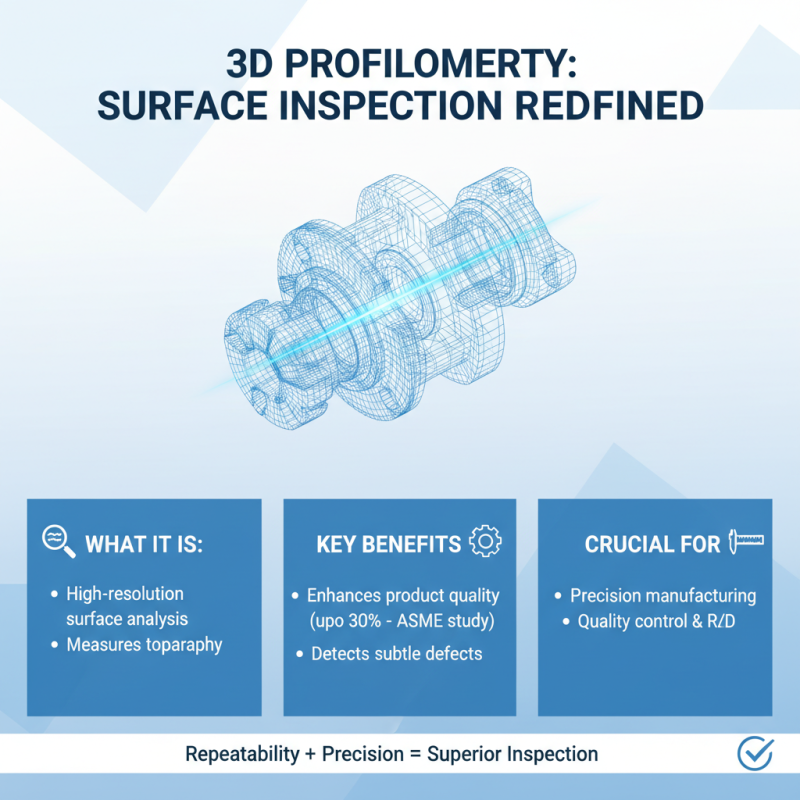
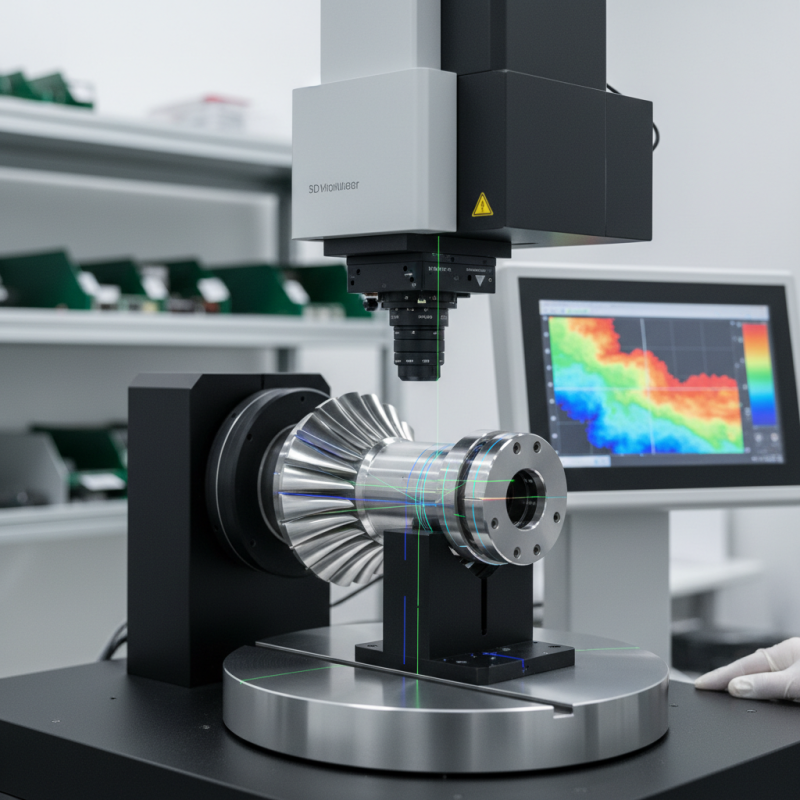
3D profilometry stands at the forefront of surface inspection technology. This technique allows for high-resolution analysis of surface topographies. According to a recent study by the American Society of Mechanical Engineers, accurate surface measurements can enhance product quality by up to 30%. The repeatability and precision of 3D profilometers are crucial for detecting defects that traditional methods might miss.
Effective inspection techniques are critical. One key tip is to maintain proper calibration. Regular checks ensure that your equipment remains reliable. Calibration drift can lead to varied results, which may compromise data integrity. Clean surfaces before inspection is another essential step. Contamination leads to misleading data and can mask defects.
Collating multiple measurements over time enhances your analysis. This approach provides a comprehensive understanding of surface changes. Implementing a consistent data analysis protocol can help you identify trends. It’s also important to consider that equipment limitations can affect results. Acknowledge and address these limitations to improve overall inspection accuracy.
Importance of Calibration in 3D Profilometer Inspection Accuracy
Calibration plays a crucial role in 3D profilometer inspections. Accurate measurements depend on consistent calibration processes. Inaccurate calibration can lead to misleading results. Even slight deviations can affect the measurement of surface profiles. This can cause significant errors in quality control and product evaluation.
Regular calibration checks ensure the devices function correctly. Using standard reference samples helps maintain accuracy over time. Technicians should document all calibration efforts for transparency. It's essential to understand that calibration is not a one-time task. Continuous monitoring is necessary to adapt to environmental changes and wear of equipment.
Failure to calibrate properly can result in costly consequences. A wrong measurement may lead to product failures or recalls. Always question the reliability of the calibration process. Evaluate whether the techniques align with industry standards. Identify areas where calibration may need improvement. Investing in reliable calibration practices enhances accuracy and builds trust with end-users.
3D Profilometer Inspection Techniques Effectiveness
This chart displays the effectiveness ratings of various 3D profilometer inspection techniques based on critical factors such as calibration, measurement accuracy, surface roughness, data repeatability, and user training. The effectiveness is rated on a scale of 1 to 10, highlighting the significance of calibration in ensuring high accuracy during inspections.
Choosing the Right Measurement Parameters for Your Profilometry Needs
Choosing the right measurement parameters for your profilometry needs is crucial. The parameters you select directly impact the accuracy and reliability of your measurements. For optical profilometers, consider factors such as resolution, measurement range, and sensitivity. High resolution ensures you can detect small surface features. However, it may also increase the scan time.
Another aspect is the measurement range. If you're dealing with a variety of surface heights, a broad range is essential. Conversely, if the surfaces are relatively uniform, a narrower range may provide better detail. Sensitivity is equally important; a more sensitive system can detect minute variations, but it can also introduce noise. Balancing these characteristics helps in achieving effective results.
Real-world applications often reveal complexities. Sometimes, settings that work in theory fall short in practice. Factors like environmental conditions and surface texture can significantly alter outcomes. Regularly revisiting and adjusting your parameters in response to unexpected results is beneficial. This adaptability is key to mastering 3D profilometry.
10 Tips for Effective 3D Profilometer Inspection Techniques
| Tip Number |
Technique |
Measurement Parameter |
Recommended Value |
Notes |
| 1 |
Surface Roughness Measurement |
Ra (Roughness Average) |
0.3 µm |
Ideal for assessing finish quality. |
| 2 |
Step Height Measurement |
Step Height |
50 µm |
Ensure proper calibration is done before taking measurements. |
| 3 |
Slope Measurement |
Angle of Incline |
10° |
Useful for evaluating surface contour. |
| 4 |
Feature Size Measurement |
Critical Dimension |
200 µm |
Key for microfabrication quality checks. |
| 5 |
Data Sampling Frequency |
Sampling Interval |
1 µm |
Higher frequency results in detailed surface maps. |
| 6 |
Environmental Conditions |
Temperature and Humidity |
20°C, 40% RH |
Stable conditions recommended for accuracy. |
| 7 |
Verification of Calibration |
Calibration Standards |
Traceable Standards |
Essential for maintaining measurement integrity. |
| 8 |
Image Processing Techniques |
Post-Processing Algorithms |
Advanced Filtering |
Improves data accuracy and clarity. |
| 9 |
Measurement Evaluation |
Error Analysis |
< 5% |
Checks reliability of measurements taken. |
| 10 |
Documentation of Results |
Data Logging Format |
PDF and CSV |
Ensures repeatability and traceability of data. |
Analyzing Surface Roughness: Essential Metrics and Industry Standards
In the realm of surface metrology, analyzing surface roughness is vital. It directly influences product performance and longevity. Metrics such as Ra (average roughness) and Rz (average maximum height) are essential. According to the ISO 4287 standard, Ra provides a straightforward measure of roughness, but it's crucial to consider complex profiles too. Some industries require Rq (root mean square roughness) for a precise evaluation.
Surface roughness can affect adhesion, friction, and wear resistance. For instance, automotive parts often have specified Ra values of 1.6 micrometers for optimal tire contact. Deviations from these metrics can lead to issues. A study by the American Society of Mechanical Engineers found that improper surface finish can increase failure rates by 30%. This highlights the importance of accurate assessment using 3D profilometer techniques.
Many technicians struggle with interpreting roughness data. Often, they overlook parameters that significantly impact quality assurance. Inconsistent measuring techniques can also yield unreliable results. As noted in the latest report from ASTM International, improvements in data collection methods are essential for better accuracy. Adopting standardized practices ensures that surface profiles meet industry requirements and enhance product reliability.
Common Challenges in 3D Profilometer Inspection and Their Solutions
3D profilometer inspections face several challenges that can affect measurement accuracy. One common issue is surface contamination. Dust, oils, and other residues can obscure true surface profiles. Studies show that up to 30% of measurement errors arise from such interferences. Regular cleaning and a controlled environment can help mitigate this.
Another challenge is the alignment of the profilometer. Misalignment can lead to inconsistent results. According to industry reports, misalignment contributes to around 25% of inaccurate measurements. Proper training for operators is essential. Training sessions should include guidelines for ensuring correct equipment positioning.
Lastly, data interpretation can be complex. Analysts often struggle with large datasets from 3D scans. A report indicated that 40% of users find data overload a significant obstacle. Implementing automated analysis tools can help. These tools can streamline data processing and improve accuracy. Regular calibration also enhances reliability, ensuring that the measurements remain valid over time.