Optical Communication Assembly matters because buyers are not purchasing isolated components; they are selecting a connected system whose parts must work together. A transmitter, receiver, fiber interface, and enclosure can each meet specifications yet still perform poorly when alignment, connector quality, or thermal behavior is overlooked. Small details matter. A slightly misaligned optical path can reduce signal strength, while inconsistent assembly may create avoidable testing and maintenance work.
For buyers, careful evaluation starts with clear requirements: data rate, reach, operating temperature, connector type, and expected service life. Ask how assemblies are inspected, what tests are performed, and whether results are documented for each production batch. These questions make supplier claims easier to compare. They also reveal whether a low quoted price reflects efficient manufacturing or omitted quality controls. One uncomfortable truth: a polished datasheet cannot prove consistent workmanship.
I can’t verify a quotation from a named Optical Communication Assembly specialist from the material provided, so I won’t invent one. The buyer-focused principle is simple: “Choose an assembly you can verify, not merely one you can specify.” Treat that as practical guidance, not a sourced expert quotation. Strong purchasing decisions depend on traceable test evidence, realistic performance margins, and honest discussion of trade-offs. Even then, no assembly is perfect for every network. A reliable supplier should explain where its product fits—and where it does not.

Optical communication assembly is the connected set of parts that carries light signals between network devices. It can include optical transceivers, fiber-optic cable, connectors, patch panels, and, where needed, splitters or wavelength multiplexers. The exact mix depends on distance, data rate, fiber type, and the equipment at each end.
Small details matter: a dusty connector end face can raise signal loss, while a cable bend behind a rack can weaken performance. Cleanliness is not cosmetic.
Buyers should also consider how components are tested and documented. A complete assembly may be checked for insertion loss, return loss, continuity, and compatibility with the intended link.
Cisco’s 2020 Annual Internet Report forecast that global IP traffic would reach 4.8 zettabytes annually by 2022, illustrating the scale of demand placed on network infrastructure.
That forecast is not a specification for any assembly, but it helps explain why dependable optical links matter. Ask for test results, connector and fiber details, and clear labeling; otherwise, comparing assemblies can become difficult.
One imperfect point: published test figures may not reflect the conditions inside your own rack. Verify fit and performance in the actual installation.
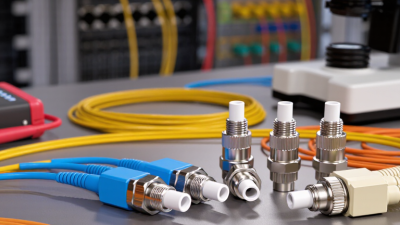
Optical communication performance depends on more than the fiber itself. Assembly quality affects signal loss, connection stability, and how reliably equipment operates under daily use. A poorly aligned connector can weaken a signal, while an unevenly polished end face may create reflections. The difference can be difficult to spot by eye.
Details matter. Clean fiber ends, accurate alignment, secure strain relief, and consistent testing help assemblies perform as expected. During installation, technicians may handle cables in tight cabinets or route them around bends. A well-built assembly is easier to install and less likely to suffer damage from routine handling. Small defects can become costly interruptions.
Buyers should review test records, inspection practices, and compatibility with their equipment—not just the quoted price. Ask how insertion loss and return loss are measured, and whether samples are checked across production batches. Measurements help, but they are not the whole story. Assembly quality can vary, and no test removes every risk. Clear documentation and realistic specifications make it easier to compare suppliers and plan maintenance.
Optical communication assemblies must work as a matched system, not as isolated parts. A transceiver, fiber, connector, and link budget can each meet specification yet still fail together. Buyers should verify fiber type, wavelength, connector polish, reach, and supported data rate against the equipment at both ends. A mismatch may appear as intermittent errors rather than a complete failure, making diagnosis slow. Check insertion loss and return loss, too. On a crowded rack, even a slightly bent patch cord can undermine a carefully planned link.
Reliability has a measurable cost. Uptime Institute’s 2024 Annual Outage Analysis reported that 54% of respondents said their most recent significant outage cost more than $100,000; 16% reported costs above $1 million. That is not an optical-component study, but it shows why buyers should examine assembly quality and traceability. Ask for test records, clear labeling, and consistent inspection criteria. Confirm that assemblies are validated against the relevant interface specifications, such as IEEE 802.3, and the actual operating conditions. A supplier’s test sheet helps, but it cannot replace checking the installed link. Small details matter. Compatibility is sometimes treated as a checkbox; in practice, it deserves a second look.
Compatibility and reliability help buyers reduce integration problems, service interruptions, and lifecycle costs.
Illustrative ratings on a 1–5 buyer evaluation scale, not results from a survey. Compatibility includes fit with interfaces and equipment; reliability reflects expected dependable operation.
Optical assembly choices shape both the purchase price and the time needed to bring a link online. A pre-terminated trunk can reduce field splicing and testing, but its fixed length may create extra slack in a short rack. A custom assembly costs more planning time, yet can fit crowded trays and avoid awkward bends. Small details matter: connector polish, polarity, fiber type, and measured insertion loss should match the equipment and route. One missed polarity check can delay commissioning.
Demand makes these decisions more consequential. Synergy Research Group reported that global cloud infrastructure services spending reached $330.4 billion in 2024, up 22% year over year. That growth does not measure optical assemblies directly, but it signals continuing pressure to expand network capacity. For buyers, comparing only unit prices can therefore miss labor, testing, spare lengths, and the cost of a delayed rack. Ask suppliers for insertion-loss test results and clear labeling, then verify a sample before ordering at scale. It is easy to over-specify. Still, a cheaper assembly that needs rework may cost more after installation.
| Assembly Choice | Typical Application | Cost Consideration | Deployment Impact | Buyer Check |
|---|---|---|---|---|
| Connectorized fiber assembly | Patch panels, equipment connections, and links that may need to be disconnected or rerouted. | Connectors and finishing add upfront cost; reusable connections can reduce replacement and service effort. | Enables faster installation and troubleshooting, but connector cleanliness and mating compatibility matter. | Confirm connector type, polish, fiber mode, end-face inspection, and insertion-loss requirements. |
| Splice-based assembly | Permanent fiber routes in access, campus, and backbone networks. | May reduce connector-related recurring losses, but requires splicing equipment, skilled labor, and access for repairs. | Can provide a compact, low-loss joint; installation and restoration may take longer than plug-in connections. | Specify splice method, enclosure, expected loss, route documentation, and repair access. |
| Pre-terminated trunk assembly | Data-center rows, structured cabling, and projects with repeated connection layouts. | Factory termination can reduce field labor and installation variability; custom lengths or low volumes may increase purchase cost. | Can shorten installation time, provided cable lengths, connector layouts, and pathways are planned accurately. | Verify length, polarity, connector mapping, breakout design, and pathway capacity before ordering. |
| Field-terminated assembly | Routes requiring on-site length adjustment or connections in non-standard layouts. | Can limit custom-cable inventory, but field labor, tools, testing, and rework can raise total installed cost. | Offers flexibility on site; deployment quality depends on technician skill and environmental conditions. | Check termination procedure, technician qualifications, test records, and acceptable loss limits. |
| Single-mode fiber assembly | Longer-distance links and high-capacity network infrastructure. | Fiber and compatible optical components must be specified as a system; incorrect matching can lead to costly replacement. | Supports long-reach applications when used with compatible optics and properly engineered link budgets. | Confirm fiber specification, operating wavelength, reach, transceiver compatibility, and link budget. |
| Multimode fiber assembly | Shorter-distance links, including many building and data-center connections. | Can suit short-reach applications, but allowable distance depends on fiber category, data rate, and transceiver combination. | May simplify short-reach deployment; mismatched components can restrict supported distance or performance. | Verify fiber category, link length, data rate, connector type, and transceiver specifications. |
| Ruggedized or armored assembly | Industrial areas, exposed routes, and locations with greater risk of abrasion or mechanical damage. | Protective construction may increase material and handling costs; it can help avoid damage-related repair expenses. | Improves physical protection when selected for the actual environment, but may require more space and careful routing. | Assess temperature, moisture, crush and bend requirements, installation route, and applicable safety rules. |
| Custom-length assembly | Equipment-to-equipment links and routes with defined distances or space constraints. | Accurate measurement can reduce excess slack and cable waste; late changes may require replacement or expedited production. | Can improve cable management and simplify installation when measurements and routing plans are reliable. | Include route allowance, service loops, connector orientation, labeling, and installation tolerances. |
Optical communication assemblies connect network design with daily uptime. Buyers should assess more than connector price. Cisco’s Annual Internet Report projected global IP traffic at 396 exabytes per month in 2022. That scale makes insertion loss, thermal behavior, and replacement speed commercial concerns.
Request measured insertion-loss and return-loss results at every operating wavelength. Check polarity, fiber type, connector end-face quality, and bend-radius limits. IEC 61300-3-35 provides a recognized method for inspecting fiber connector end faces. Thermal cycling, humidity exposure, and vibration tests also deserve attention. However, test conditions can be selectively presented. Ask for sample sizes, acceptance limits, and failed-test records, not only clean charts.
Compatibility needs equal scrutiny. Confirm transceiver reach, operating temperature, power tolerance, and management-interface requirements. LightCounting’s 2024 market analysis valued the optical transceiver market above US$10 billion in 2023, reflecting strong demand for higher-speed links. That growth can pressure suppliers to release assemblies quickly. Buyers should therefore verify production capacity, lot traceability, calibration records, and repair procedures. Field trials are useful. I would not approve a large order from a laboratory sample alone. A polished datasheet may hide installation problems, especially when technicians work in crowded racks with limited bend space. Request several production samples and inspect them after repeated mating cycles.