How to Choose the Best Precision Machining Supplier?
Choosing the right precision machining supplier is crucial for any manufacturing business. As noted by industry expert Dr. Emily Carter, "The right partner can elevate your production quality and efficiency." Precision machining refers to the process of removing material to create parts with high accuracy. This can impact the performance of your products significantly.
When selecting a precision machining supplier, consider their experience and expertise. A reliable supplier should demonstrate a solid track record in the industry. For instance, look into their past projects and client testimonials. Quality control practices should also be assessed. Inadequate quality checks can lead to costly errors.
You might feel overwhelmed by the options available today. It’s worth acknowledging that not every supplier fits every need. Take the time to evaluate your specific requirements and how a supplier aligns with them. By doing so, you can make a more informed choice and ensure your production processes run smoothly.

Understanding Precision Machining and Its Importance in Manufacturing
Precision machining plays a crucial role in manufacturing, impacting product quality and efficiency. It involves using advanced tools and techniques to create highly accurate components. These parts are essential in industries like aerospace, automotive, and medical devices. A single defect can lead to significant failures, hence the importance of selecting the right supplier.
Tips: Assess the supplier's experience in your specific industry. Longevity and specialization are strong indicators of reliability. Look for certifications that validate their quality standards, as these can indicate adherence to precise protocols.
Quality assurance in precision machining is not just about the machinery used. It also involves skilled technicians who understand the nuances of their craft. Imperfections may arise from human factors or material limitations. A good partner acknowledges these challenges and has protocols to address them quickly.
Tips: Communicate openly about your project's requirements. An effective supplier will provide insights based on their experience. Don’t overlook customer reviews; they often highlight how a supplier handles mistakes or unforeseen issues.
Key Qualities to Look for in a Precision Machining Supplier
Choosing the right precision machining supplier is crucial for project success. Key qualities can significantly impact manufacturing outcomes. Experienced suppliers possess deep industry knowledge. Their ability to provide insights can streamline your production process.
Certifications matter. Look for suppliers with ISO 9001 or AS9100 certifications. These signify commitment to quality management systems. According to industry reports, organizations working with certified suppliers experience 20% fewer production errors. This statistic underlines the importance of quality assurance.
Technical capabilities are also vital. The supplier should use advanced technologies and sophisticated equipment. Performance metrics often reveal that shops with modern CNC machines can achieve precision within 0.001 inches. This level of accuracy is essential in sectors like aerospace and automotive. Consider their range of services as well. A versatile supplier can adapt to your changing needs. However, even top-tier suppliers can occasionally face capacity issues. Always assess their production schedules and delivery timelines to avoid delays.
Evaluating Supplier Capabilities and Technologies for Precision Machining
Choosing the right precision machining supplier requires careful evaluation of their capabilities and technologies. Start by examining their production processes. Are they using advanced machinery? Reliable equipment can significantly impact part quality and consistency. Look for suppliers that invest in the latest technology to stay competitive.
When assessing a supplier's capabilities, pay attention to their certifications and quality assurance measures. Certifications can indicate a commitment to industry standards. Find out their approach to quality control and how they handle defects. Some suppliers might claim to have rigorous processes but produce inconsistent results.
Tips: Always request samples before making a decision. Comparing their work can provide insights into their craftsmanship. Engage in conversations with their technical team. Ask questions about their materials and production techniques. This dialogue can reveal their expertise and willingness to collaborate.
Also, consider their customer support. A responsive and knowledgeable team can ease communication. Reflect on your experiences with their representatives. Do they understand your requirements? A supplier’s commitment to service can be just as important as technical capabilities. Balancing these factors will guide you toward a reliable precision machining partner.
Assessing Customer Service and Support of Potential Suppliers
When evaluating potential precision machining suppliers, customer service and support are often overlooked. According to a recent industry report, 70% of customers prioritize responsive communication during the supplier selection process. A delay in replies can lead to inefficiencies. First impressions matter; suppliers should provide clear, accessible points of contact.
It's crucial to assess how a supplier handles customer inquiries. Promptness and professionalism reflect their commitment to quality. A survey indicated that suppliers with dedicated customer support teams enjoy 25% higher customer satisfaction rates. Engaging with a supplier during the inquiry stage can reveal much about their service ethos.
Consider suppliers that offer technical support beyond just transactions. Consultative selling—where suppliers offer insights or guidance—can enhance value. This can be a double-edged sword; not all suppliers communicate technical aspects effectively. Misunderstandings can create challenges. Thus, requesting a demonstration of their customer support process may provide clarity on how they will assist you.
Comparing Pricing Structures and Value for Precision Machining Services
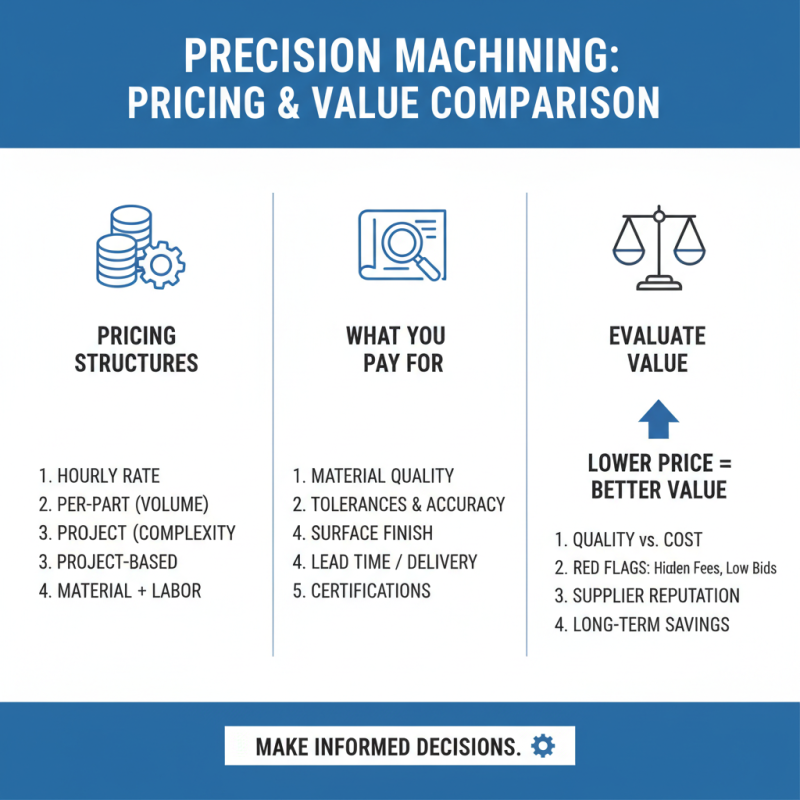
When selecting a precision machining supplier, understanding pricing structures is essential. Many suppliers offer a range of pricing options based on complexity and volume. It’s crucial to assess what you are paying for. Lower prices might indicate reduced quality or service. Evaluate quotes carefully, looking for hidden costs.
Tips: Always request detailed quotes that outline material costs, machining hours, and additional fees. Transparency is vital in establishing trust.
Consider the overall value, not just stickers prices. A supplier with competitive rates might charge more upfront but deliver superior quality. This could save costs in the long run through fewer defects and less rework.
Tips: Assess the supplier’s track record for reliability and quality. Ask for references or case studies. Understanding their experience can mitigate risks.
Quality assurance processes also influence value. Suppliers with stringent quality checks often produce better outcomes. Reliability in delivery times also matters. Late deliveries can lead to costly delays in your project.
Tips: Discuss quality control methods during your initial consultations. Ensure they align with your standards before committing to a supplier.